

Stress quietly infiltrates our routines; not always through major crises, but through constant, low-level pressure. Managing it effectively isn’t about eliminating challenges, it’s about developing adaptability, awareness, and strategies that help you stay grounded when life accelerates

Key Insights
Stress management focuses on resilience, not avoidance.
Micro-habits are more effective than big, infrequent resets.
Simple frameworks (like daily check-ins and time blocking) prevent burnout before it builds.
Natural and alternative stress-relief methods can safely complement traditional approaches.
The goal: consistency over intensity, calm over control.
Anchoring Calm Through Small Daily Shifts
Small, sustainable actions transform how you experience stress across the day. Even minimal adjustments can rewire your baseline toward calm. Here are a few practical, evidence-backed approaches to try:
Micro-breaks: One minute away from your screen or desk can recalibrate attention.
Ritual starts: Anchor your morning with one consistent cue, like a stretch, short journal note, or quiet tea.
Regulated breathing: Use the 4-7-8 method to release tension during transitions.
Focused limits: Block notifications for an hour when working on deep tasks.
Sleep rhythm: Keep consistent sleep and wake times to strengthen your body’s recovery loop.
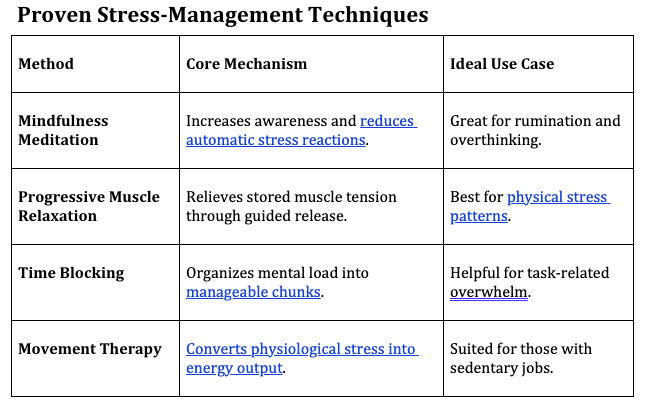
Each method strengthens a different aspect of resilience — mental, emotional, or physical.
Explore Safe, Holistic Alternatives for Stress Relief
Complementary, low-risk approaches can help regulate the body’s stress response and deepen relaxation when used responsibly. These modalities work best alongside lifestyle habits like movement, rest, and mindful breathing. Here are four options to explore:
Mindful Movement: Practices like yoga, tai chi, or gentle stretching combine focus, breath, and motion — lowering cortisol and improving body awareness.
Sound Therapy: Exposure to soothing frequencies or rhythmic sound can slow heart rate and encourage a meditative state.
Essential Oils: Scents such as lavender, chamomile, or bergamot can trigger the parasympathetic nervous system and promote calm when diffused or applied safely.
THCa Products: Some individuals want to explore non-psychoactive relaxation options like THCa for easing physical or emotional tension. Take a look at safe formulations.
A 5-Step Mini Audit for Stress Awareness
When life feels like it’s accelerating, pause and run through this short reflection cycle.
Observe: Notice where stress surfaces: body tension, racing thoughts, or emotional fatigue.
Label: Name the feeling — “pressure,” “frustration,” “overload.” This weakens its influence.
Pause: Take one full breath or a brief walk to reset the nervous system.
Adjust: Choose one small corrective action (drink water, stretch, or silence notifications).
Track: Record triggers briefly; patterns emerge faster than you think.
Awareness converts invisible strain into actionable insight.
Everyday Resilience: A Simple Checklist
Maintaining equilibrium is easier when small safeguards become routine.
Use this daily list to fortify your calm:
Keep your sleep schedule steady.
Move or stretch for at least 10 minutes a day.
Limit stimulants when you feel tense.
Protect at least one block of “no-input” time.
Reconnect with supportive people weekly.
Reflect briefly on gratitude or progress before bed.
FAQ
How long before I feel better once I start stress management techniques?
Most people notice subtle improvements within one to two weeks. Over time, your stress threshold rises as consistent habits train the body to recover faster. The key is consistency, not perfection.
Is all stress harmful?
No. Short-term stress (eustress) can boost motivation and performance. The challenge is keeping stress episodic, not chronic; continuous exposure without rest undermines well-being.
Why do I feel anxious when I try to relax?
Your body may be conditioned to stay in alert mode. Gradual relaxation, starting with breathwork or light activity before meditation, helps you transition safely without discomfort.
Can alternative modalities replace therapy or medication?
They can complement, not replace, professional treatment. Always consult your healthcare provider before introducing supplements or plant-based remedies, especially if you have health conditions or take medications.
What’s the simplest practice to start today?
Controlled breathing; even two minutes of slow, deliberate breathing lowers cortisol, improves focus, and signals safety to the brain.
Closing Thoughts
Stress is an unavoidable companion in modern life, but it doesn’t have to define your days. Through consistent micro-habits, mindful awareness, and safe complementary practices, you can restore balance and clarity.
The goal isn’t to erase stress, but to build a rhythm where calm becomes your default, a quiet strength that carries you through whatever comes next.